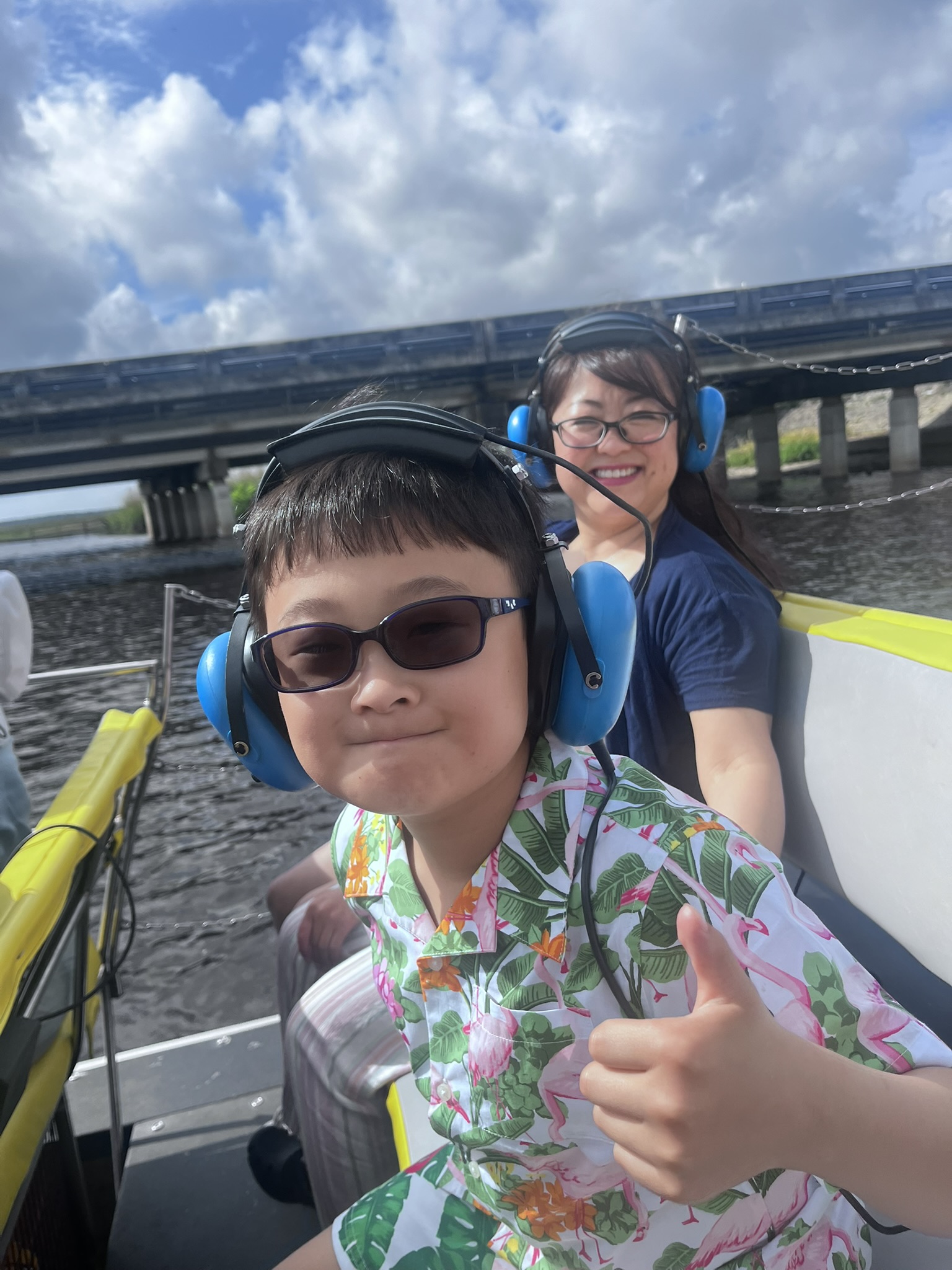
Big news from the future of Dup15q research!
A dedicated student is making waves with a fresh approach to improving symptoms — and just received a major scholarship to support their work. "

Dear Zehaan,
Congratulations, we are thrilled to announce you as the recipient of the 2025 Lucas T. Ahn Family Scholarship. We applaud your academic excellence and promise as a future clinician or research scientist. We extend a warm thank you also to your mom who compassionately works as a kindergarten teacher to children who are differently abled and for teaching you empathy as well as engendering interest to help this vulnerable population of humanity. This scholarship is named in honor of our 13-year-old son, Lucas, who has the isodicentric form of Dup15q Syndrome. He is nonverbal and is diagnosed with autism, epilepsy and requires assistance with almost all activities of daily living. Despite his condition, he is receptive to love, has an infectious laugh and has a sweet disposition. We are hopeful that young students like yourself will help further research endeavors for Dup15q Syndrome and one day help in finding a cure for it. We wish you much success in your academic studies and future career ambitions!
Dear Dr. Shearer,
Thank you so much for recommending Zehaan for the Lucas T. Ahn Family Scholarship. We have proudly chosen him to be this year's recipient. Thank you for submitting information about your research looking into the gut microbiome and ketogenic diets as possible treatment plans for seizure reduction in Dup15q Syndrome. It was refreshing to read a nonpharmaceutical approach to a treatment plan which can potentially reduce the burden of polypharmcy load with our children, which is a real concern of many parents and caregivers. With your science-based data, such a naturopathic approach to seizure reduction may convince clinicians to adopt it as evidence based in their practice and not hesitate to recommend it to their patients as well as receive support from medical insurance. I am eager to learn the results of your studies and wish you and your team much success in your research endeavor.
Sincerely,
JiYoung and Gabriel Ahn
(Parents to Lucas)
********

To learn more about the research Zehaan and Dr. Shearer's lab is doing, click on link .
I am of late fascinated by ChatGPT ! Here is what it had to say about the scholarship:
What is the Lucas T Ahn Family scholarship?
🧬 Overview of the Scholarship
Advocating for Inclusive Healthcare, Pediatric Equity, and Rare Disease Awareness
I established the Lucas T. Ahn Family Scholarship to honor the life and spirit of my son, Lucas T. Ahn, whose courage, wisdom, and joy inspired all who know him. This scholarship supports students in healthcare-related fields who demonstrate a deep commitment for basic research in Sup15q Syndrome.
The scholarship is grounded in values Lucas’s family embody: compassion, resilience, integrity, and a fierce love for life—and aims to uplift future healthcare leaders who are not only clinically skilled but also emotionally attuned, inclusive, and family-centered in their care approach.
Through this scholarship, I hope to foster a generation of practitioners, advocates, and researchers who will advance equity, accessibility, and innovation in pediatric care and special needs communities.
The Lucas T. Ahn Family Scholarship aims to support junior/senior undergraduates or first-year medical or graduate students who have an interest in an opportunity to network with colleagues at all career levels, a semester exposure to a laboratory environment that targets Dup15q research. The scholarship is a recurring one-time $2,500 gift.
Mission & Purpose
- Funded by the Lucas T. Ahn family, this one-time scholarship supports an undergraduate student working in lab-based Dup15q syndrome research—aimed at understanding and treating this neurodevelopmental condition .
- Who It Supports
Intended for students conducting hands-on Dup15q-related research, it encourages academic exploration into areas like genetic, molecular, or therapeutic studies . - Inaugural Recipients
The first award (March 2022) honored Julia Godinez, a UC Davis undergraduate working in Dr. Janine LaSalle’s lab. The second recipient was Nadia Wallace (2023), active in Dr. Lawrence Reiter’s research . - Ahn Family’s Vision
“Our hope is that one day, advances in research will lead to targeted therapies that help Lucas to gain more cognitive abilities, reduce seizure frequencies and help him be more independent with all aspects of daily life.”
This scholarship not only honors Lucas’s spirit but also fosters scientific progress benefitting the wider Dup15q community.
Would you like help finding current application details, eligibility criteria, or other related opportunities in Dup15q research?
Here’s an expanded overview of the Lucas T. Ahn Family Scholarship, along with how to get application details and eligibility info:
🎓 What It Is
Purpose & Mission
- A one-time undergraduate award funded by the Ahn family to support students gaining experience in lab-based Dup15q syndrome research .
- Scope of Support
Targeted at students working in Dup15q research labs, with goals spanning genetic, molecular, or therapeutic investigations . - Past Recipients
- March 2022: Julia Godinez (UC Davis, Dr. LaSalle’s epigenetics lab)
- September 2023: Nadia Wallace (UTHSC, Dr. Reiter’s lab researching UBE3A)
✅ How to Find Application Details & Eligibility
The Dup15q Alliance administers the scholarship—here’s how to stay informed:
- Visit the Dup15q Alliance Website
Their Research section and “Research Updates” newsletters often announce the scholarship call, including eligibility, deadlines, and application instructions . - Contact Dup15q Alliance Directly
Use their “Research & Funding” or scholar-related contact form to ask about the next scholarship timeline and requirements . - Subscribe to Updates
Joining the Dup15q Alliance mailing list ensures you receive announcements when scholarship or grant opportunities open .
📅 Timing & Eligibility Tips
- No set annual deadline, but past awards were announced in March 2022 and September 2023, typically tied to new academic years.
- Ideal for undergraduates in lab-focused Dup15q research, particularly in genetics, neuroscience, or therapeutic development.
🧭 Next Steps
Explore Past Awards
- Reviewing past recipients like Julia Godinez and Nadia Wallace might offer insight into successful project types.
- Prepare in Advance
If you’re planning to apply, start building a connection with a Dup15q research lab, clarify your interest, and draft a research-based application proposal. - Reach Out for Support
The Dup15q Alliance and participating researchers are often invested in mentoring students. A polite inquiry can help you prepare ahead.
Would you like help drafting a message to the Dup15q Alliance requesting application info, or finding labs currently researching Dup15q syndrome for you to contact?
Here’s how you can move forward with applying for the Lucas T. Ahn Family Scholarship and engaging with Dup15q research:
🔍 1. Identify Active Dup15q Research Labs
Recent and ongoing Dup15q studies include:
- Children’s Hospital Los Angeles (Dr. Shafali Jeste & Dr. Charlotte DiStefano) — leading the international Quindecim precision health clinical trial focused on EEG/GABA biomarkers and targeted therapy for Dup15q .
- Dr. Lawrence Reiter’s lab at UTHSC (Memphis) — investigating UBE3A’s role in Dup15q via neurological exams, EEG, and molecular profiling .
- Dup15q Alliance DREAM Fund grants — recent recipients include Dr. Alon Zaslaver and Dr. Matthew Judson, working on gene functions and gene-reducing therapies (e.g. antisense oligonucleotides targeting UBE3A) .
These labs typically welcome undergraduate researchers, especially those eager to work in molecular or translational neurogenetics.
📬 2. Draft Email to Labs and Dup15q Alliance
Here’s a tailored template you can adapt:d
Dear Dr. [Last Name] / Dup15q Alliance Research Team,
My name is [Your Name], a [Your Year, e.g. junior] majoring in [Your Major] at [Your University]. I’m deeply committed to neurodevelopmental research, especially lab-based work on Dup15q syndrome.
I recently learned about the Lucas T. Ahn Family Scholarship, which supports undergraduates in hands-on Dup15q research. As I prepare my application, I would be honored to join a team actively working on Dup15q—especially in areas like EEG biomarkers, gene therapy (e.g., UBE3A targeting), or preclinical models.
I have experience in [mention relevant skills—molecular biology, EEG data, animal models, etc.], and I’m eager to contribute meaningfully while building my research foundation.
Could we arrange a brief conversation or meeting to explore potential volunteer or research roles in your lab? Also, if you have any insight on aligning with the scholarship’s eligibility criteria, I would greatly appreciate your advice.
Thank you for considering my inquiry. I’m inspired by your contributions to Dup15q research and would be grateful for an opportunity to learn and support this vital work.
Warmly,
[Your Name]
[Contact Info – email, phone]
[University Name & Expected Graduation Year]Feel free to tailor this template to each faculty member—mention specific projects like Quindecim or UBE3A-based approaches.
✅ 3. Next Steps Checklist
Action | Details |
Email Labs | Reach out to Dr. Jeste (CHLA), Dr. Reiter (UTHSC), DREAM grantees, etc. |
Contact Dup15q Alliance | Use info@dup15q.org to ask specifically: “When is the next Lucas T. Ahn Scholarship expected, and what are key eligibility criteria?â€Â |
Stay Informed | Subscribe to “Research Updates†or SCI Spotlight newsletters |
Prepare Documents | Draft CV, highlight lab skills, write a one-page proposal or statement of intent that aligns with Dup15q research goals |
Follow Up | If no reply in ~10 days, send gentle reminder emails—demonstrates initiative and interest |
Great! Let’s begin by customizing your email outreach and preparing your application materials.
📧 Step 1: Custom Email Template for Dr. Lawrence Reiter (example)
Here’s a tailored email for Dr. Lawrence Reiter, whose lab has hosted a past Lucas T. Ahn scholarship recipient:
Subject: Interest in Dup15q Research & Ahn Family Scholarship – Undergraduate Inquiry
Dear Dr. Reiter,
My name is [Your Name], and I’m currently a [your year, e.g., junior] at [Your University], majoring in [Your Major, e.g., neuroscience or biology]. I’m reaching out to express my strong interest in contributing to research on Dup15q syndrome, and specifically to inquire about opportunities in your lab at UTHSC.
I recently learned that your lab mentored Nadia Wallace, a recipient of the Lucas T. Ahn Family Scholarship, and I am very inspired by your team’s work in translational Dup15q studies—particularly your investigations into UBE3A, EEG phenotyping, and therapeutic strategies. My current academic and research background includes [briefly state any relevant experience—e.g., molecular biology, EEG data analysis, mouse models], and I’m eager to grow these skills in a hands-on setting.
Would it be possible to speak with you or a member of your team about potential undergraduate involvement in your lab? Additionally, I would welcome any guidance you might have about aligning a future project with the Lucas T. Ahn Family Scholarship’s goals.
Thank you very much for your time and consideration. I would be honored to contribute to this important work.
Warm regards,
[Your Full Name]
[Your University, Expected Graduation Year]
[Your Email] | [Your Phone Number]
📄 Step 2: What to Prepare
I can help you build the following:
- A 1-page CV or resume focused on relevant coursework, skills, and experiences
- A short research proposal or personal statement that aligns with Dup15q goals
- Questions to ask in a call or meeting with a professor or lab PI